Nottingham Forest honours make for one of the strangest and most wonderful trophy cabinets in English football. This is a club that has won the European Cup twice and the league title once — a ratio no other English side can match, and one that tells you almost everything about the compressed, ludicrous brilliance of the Brian Clough years at the City Ground.
For anyone new to the Reds, or anyone who simply wants the full list in one place, here is every major trophy Forest have won, when they won it, and how they did it.
Nottingham Forest honours: the full list
- European Cup: 2 — 1978/79, 1979/80
- European Super Cup: 1 — 1979
- First Division (top flight): 1 — 1977/78
- FA Cup: 2 — 1898, 1959
- League Cup: 4 — 1978, 1979, 1989, 1990
- FA Charity Shield: 1 — 1978
- Full Members’ Cup: 2 — 1989 (Simod Cup), 1992 (Zenith Data Systems Cup)
- Anglo-Scottish Cup: 1 — 1976/77
- Second Division: 2 — 1906/07, 1921/22
- Third Division (South): 1 — 1950/51
Two European Cups: 1979 and 1980
The centrepiece. Forest reached the 1979 final in Munich as English champions and beat Malmö FF 1-0, Trevor Francis heading in John Robertson’s cross on the stroke of half-time in what remains the most valuable goal in the club’s history. Francis had become Britain’s first £1m footballer earlier that season and was not even cup-tied by accident — Clough had signed him precisely for nights like that.
A year later, at the Santiago Bernabéu in Madrid, Forest did it again. This time it was Robertson himself who scored the only goal against Hamburg, a side containing Kevin Keegan, in a final Forest spent largely defending with Peter Shilton immense behind them. Back-to-back European Cups, won by a club that had been in the Second Division three years before the first of them. You can read our full account of that era in our piece on Forest’s 1979 and 1980 European Cup triumphs, and the finals are logged in UEFA’s Champions League history archive.
The 1977/78 league title
Forest were promoted from the Second Division in 1977 and won the First Division at the first attempt, finishing seven points clear of Liverpool. It was the season Clough’s side lost only three league games, and it fed into a 42-match unbeaten league run stretching across 1977, 1978 and 1979 — an English record that stood until Arsenal’s 49 in 2003/04.
Only three clubs have won the English top flight immediately after promotion. Forest are the most recent, and given the economics of the modern Premier League, they are likely to hold that distinction for a very long time.
FA Cup: 1898 and 1959
Forest’s two FA Cups sit 61 years apart. The first came in 1898, a 3-1 win over local rivals Derby County at Crystal Palace. The second, in 1959, was a 2-1 victory against Luton Town at Wembley remembered as much for its cruelty as its glory: Roy Dwight scored the opener and then broke his leg, leaving Forest to see the game out with ten men in the era before substitutes. Tommy Wilson’s header proved decisive.
The closest the club has come since was 1991, when Forest lost 2-1 to Tottenham after extra time in what turned out to be Clough’s only FA Cup final as a manager.
Four League Cups
This is where Forest quietly out-perform their reputation. Four League Cup wins put them level with some of the competition’s most decorated names.
The 1978 final needed a replay at Old Trafford after a goalless draw with Liverpool at Wembley; Robertson’s penalty settled it, with 18-year-old Chris Woods in goal because Shilton was ineligible. In 1979 Forest retained it, beating Southampton 3-2 with two goals from Garry Birtles. Then came a second double a decade later: 3-1 against Luton Town in 1989, with Nigel Clough scoring twice, and 1-0 against Oldham Athletic in 1990, Nigel Jemson getting the goal. Forest also reached the 1992 final, losing 1-0 to Manchester United.
The European Super Cup and the odds and ends
As European champions in 1979, Forest beat Barcelona over two legs to win the European Super Cup, 2-1 on aggregate. They contested it again the following year and lost narrowly to Valencia on away goals. In December 1980 they played Nacional of Uruguay for the Intercontinental Cup in Tokyo and lost 1-0 — still the only time Forest have played for a world club title.
The 1978 Charity Shield was a 5-0 demolition of Ipswich Town. Forest also won both incarnations of the old Full Members’ Cup, beating Everton 4-3 in the 1989 Simod Cup final and Southampton 3-2 in the 1992 Zenith Data Systems final — two entertaining Wembley afternoons that fans of a certain vintage remember far more fondly than the trophy’s reputation suggests.
Promotions and the modern era
Silverware is not the only currency. Forest’s 2022 Championship play-off final win over Huddersfield Town at Wembley ended a 23-year absence from the top flight and is, for a whole generation of supporters, the defining day of their fandom. The club followed it by finishing seventh in 2024/25 and qualifying for European football for the first time since the mid-1990s.
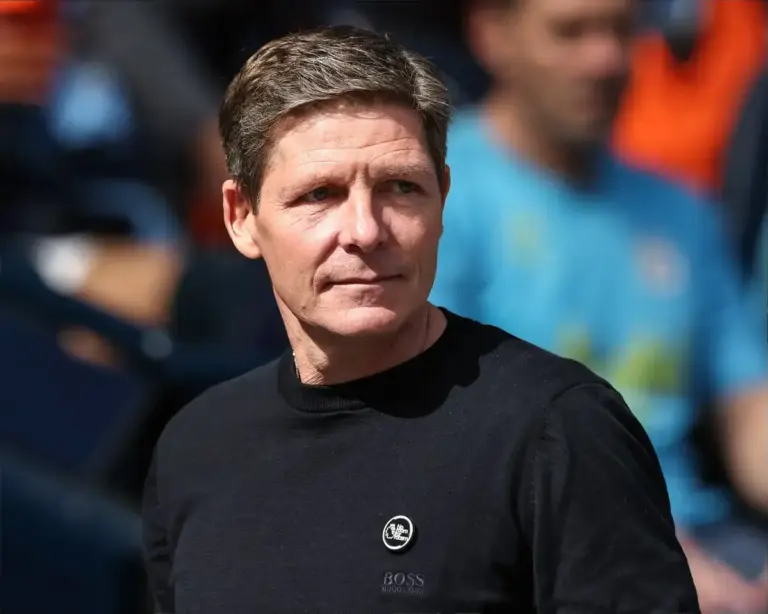
The present is a rebuild rather than a trophy hunt. Oliver Glasner arrived as head coach in July 2026 and is reshaping a squad that spent the previous campaign in a relegation fight, backed by serious spending — Liam Delap joined from Chelsea in an initial £45m club-record deal, as reported by the Nottingham Post. For the full picture of how Forest’s outlay has escalated, see our guide to the club’s record signings and most expensive transfers.
Why the Nottingham Forest honours list still matters
Because it is proof. Every club has a story about what it could be; Forest have a receipt. Two European Cups sit in a cabinet at a ground on the banks of the Trent, won by a provincial club with a modest budget and a manager who thought the whole thing was perfectly achievable. That is why the Tricky Trees carry themselves the way they do, and why the songs on the Trent End still reach back to 1979.
Full honours records are maintained by the club on the official Nottingham Forest website.