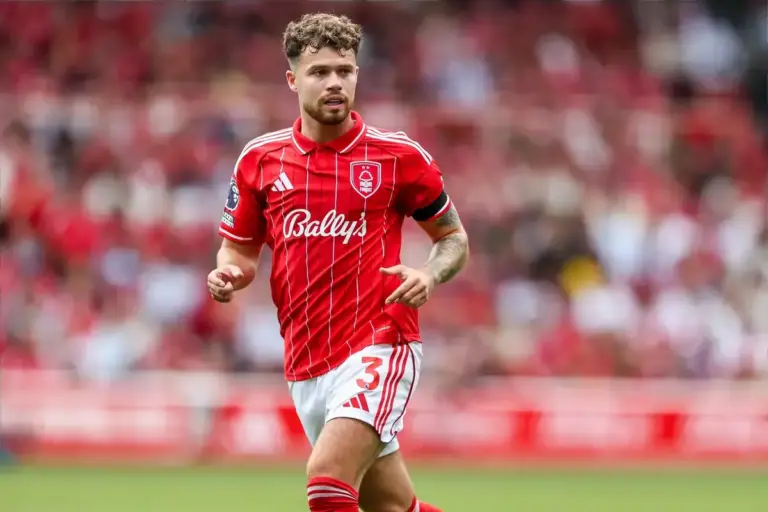
Matz Sels Nottingham Forest is, on paper, one of the least glamorous transfers of the club’s Premier League era: a 31-year-old goalkeeper, bought in a January window from a mid-table Ligue 1 side, for a fee nobody thought worth arguing about. He has since won a share of the Premier League Golden Glove. This is the guide to the No.26.
Who is Matz Sels?
Sels was born in Lint, a small town south of Antwerp, in February 1992, which makes him 34 – squarely in the years when goalkeepers are usually at their best rather than past them. He came through at Lierse, the club just up the road, and made his name at Gent, where he was the goalkeeper in the side that won the Belgian league title in 2014/15. That remains one of the great overachievements of modern Belgian football, and it earned Sels a move to England.
The move did not work. Newcastle United signed him in the summer of 2016 for a reported £6.5m, and he lost the shirt inside a few months. Within a year he was back in Belgium on loan with Anderlecht, and in 2018 he left for Strasbourg permanently. It is the sort of chapter that ends plenty of careers at the top level.
Instead, France rebuilt him. Sels spent five and a half years at Strasbourg, played more than 200 games for them, and won the Coupe de la Ligue in 2019 – the club’s first major trophy in over a decade. He was, by the time Forest called, one of the most experienced and least fussy goalkeepers in Ligue 1.
Matz Sels Nottingham Forest: how the transfer happened
Forest signed him in January 2024, in the middle of a season spent scrapping around the bottom of the Premier League with a goalkeeping department that had not settled. The fee was modest – reported at around £5m – and the signing was greeted, fairly, as a squad move rather than a statement. Our guide to Forest’s record signings gives a sense of the scale: Sels does not come close to the list, and he has arguably outperformed most of the players on it.
He took the shirt, kept it, and has not really given it back.
The Golden Glove season
The defining line on his CV is 2024/25. Sels finished that campaign as a joint winner of the Premier League Golden Glove, tied with Arsenal’s David Raya on 13 clean sheets – a Belgian bought for pocket money sharing the division’s goalkeeping award with a keeper behind one of the best defences in Europe.
It was not a personal accident. Forest finished seventh that season, their best top-flight finish since the 1990s, and qualified for European football. That side was built on defensive structure and a willingness to defend a lead deep into games, which is precisely the sort of football that makes a goalkeeper’s numbers look good – and precisely the sort that falls apart if the goalkeeper is not up to it.
How he plays
Sels is a shot-stopper first. The strengths are unshowy and specific:
- Reaction saves. He is quick to the near post and strong low to his right, and he is a good goalkeeper in a crowded six-yard box – useful in a league where set-pieces decide as many games as open play.
- Command of his line. He is decisive on crosses rather than spectacular, which suits a back line of tall, aggressive centre-halves.
- Temperament. He rarely looks flustered, which sounds like faint praise until you have watched a goalkeeper who does.
He is a competent rather than exceptional distributor. Under a coach who wants his keeper stepping out as a spare centre-back, that is the part of his game that gets examined; under a coach who wants the ball moved cleanly to a full-back and no drama, it is a non-issue.
Where he fits under Glasner
Oliver Glasner, appointed head coach on 6 July 2026, works with a 3-4-2-1 – a back three, wing-backs, two attacking midfielders. For a goalkeeper it means a slightly narrower defensive block in front of him and more bodies in the middle, but the same fundamental job: deal with what gets through.
The three centre-halves in front of him are the reason for optimism. Nikola Milenković and Murillo are established Premier League defenders, and Ousmane Diomande arrived from Sporting CP for a reported £34m in the summer. Forest also lost Morato to a season-long loan at West Ham on deadline day, which concentrates the minutes among the senior three.
Behind Sels, the department was rebuilt over the summer. Angus Gunn and Stefan Ortega were released, Steven Benda came in on a free transfer to take the No.33 shirt, and John Victor wears 12. Sels is the No.1; the competition is genuine but he starts the season in possession. The full breakdown is in our 2026/27 squad numbers guide.
The season so far
It has been a difficult start at the other end of the pitch rather than this one. Forest have two points from three Premier League games – a 0-1 home defeat to Leeds United on the opening weekend, a 2-2 draw at Liverpool in which Dan Ndoye and Morgan Gibbs-White scored, and a goalless draw with Tottenham Hotspur on 5 September in which Neco Williams had a goal disallowed for handball after a VAR check. There was also a 0-2 home loss to Leeds in the Carabao Cup second round, which ended the cup run before it started.
The Spurs game brought Forest’s first clean sheet of the campaign. The Reds are still chasing a first win, and they go to Villa Park at 3pm on Saturday once the September international break clears.
The verdict
Sels is the kind of signing supporters only appreciate properly in retrospect: no fanfare, no fee worth debating, and then two and a half years of a goalkeeper who does the job and occasionally wins you a game. A Belgian international with a league title, a French cup and a shared Golden Glove is not a stopgap. He is the reason Forest have not had to think about goalkeepers for a while – the highest compliment the position offers.
Squad details and shirt numbers are confirmed via the official Nottingham Forest website, with clean-sheet and appearance records on the Premier League’s official site and international caps through the Royal Belgian Football Association.