Elliot Anderson‘s Nottingham Forest exit was the defining piece of business of the Reds’ summer, and it turns out Manchester City were not the only Manchester club making a case for him. Ryan Giggs has revealed he spent several holes of a golf course in Portugal trying to talk the midfielder into joining Manchester United instead – and that Anderson eventually asked him to pack it in. Forest sold Anderson to City for a club-record £116m; United, as Rio Ferdinand pointed out on the same podcast, were never within reach of that number.
What Giggs actually said
Speaking on the Rio Ferdinand Presents podcast, in comments carried by the Nottingham Post, Giggs described a chance meeting that turned into a sustained sales pitch.
“I went to Portugal for a week. That’s where I saw Elliot Anderson,” the former United winger said. “It was literally a few days before he went to the World Cup. I peppered him. He didn’t know how to take it at first, and then he relaxed a little bit.
“For the first four or five holes, we were literally crossing. And at the end of it, he went, ‘Will you just let me, leave me alone. Will you just let me play my golf, please? You’re in trouble!’.”
Ferdinand’s reply was the more revealing half of the exchange. “You’ve got to try all sorts to get these deals over the line,” he said. “It’s mad, though. Obviously, the price tag was crazy and it’s just like astronomical money. Man United ain’t got the budget to pay for that. He’s a good player, though.”
Two things worth being clear about, because the story will be retold without them. Giggs holds no position at Manchester United and was not negotiating on anyone’s behalf; this was a club legend freelancing on a golf course. And Ferdinand’s “budget” line confirms what Forest supporters could already infer from the eventual fee – United were spectators, not bidders.
The £116m that reshaped a Forest summer
Anderson arrived from Newcastle United for a net £15m in the summer of 2024, a deal struck in the strange accounting weather of profit-and-sustainability season, and left two years later for a fee that sits comfortably at the top of the club’s biggest-ever sales. Roughly £100m of profit on one midfielder in twenty-four months is not a transfer. It is a balance-sheet event.
The player himself framed the two years in his farewell message to supporters. “Forest family, firstly I am so grateful for the love and support you have shown me over the last 2 years especially towards the end of this season,” Anderson wrote on social media. “From the minute I walked through the door I fell in love with this club.
“I want to thank all the staff and players for welcoming me and making my time here so enjoyable, this club gave me the opportunity to grow as a player and a person. Bringing the club European football again after 29 years is what all of you fans deserved and to be a helping hand in that is so special. Nottingham Forest will always have a special place in my heart.”
It reads as sincere, and the record supports it. He went from a Newcastle squad player to an England international in a red shirt, which is the transaction both sides were hoping for when they signed the paperwork in 2024.
What Forest did with the money
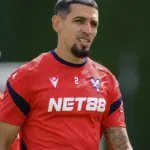
Spent most of it, and quickly. The window that closed at 11pm on 1 September produced five first-team signings for a total outlay in the region of £101m, as our full ins-and-outs guide records: Xaver Schlager on a free from RB Leipzig, Ousmane Diomande from Sporting CP for a reported £34m, back-up goalkeeper Steven Benda on a free, Liam Delap from Chelsea for a reported £50m that made him the most expensive player in the club’s history, and Daniel Muñoz from Crystal Palace for a reported £22m on 31 August.
That is a serious rebuild, and much of it looks smart. Diomande and Muñoz address the back line and the right flank in a way that suits Oliver Glasner’s 3-4-2-1. Delap is a young centre-forward with resale value baked in. Muñoz has, conveniently, already played under Glasner at Selhurst Park.
What the £116m did not buy was a midfielder of Anderson’s standing. Schlager, a free transfer, is the direct replacement in the pecking order, and he is a genuinely good footballer at a price that flatters the recruitment department. He is not a like-for-like swap, and Forest have not pretended otherwise.
The hole Anderson left
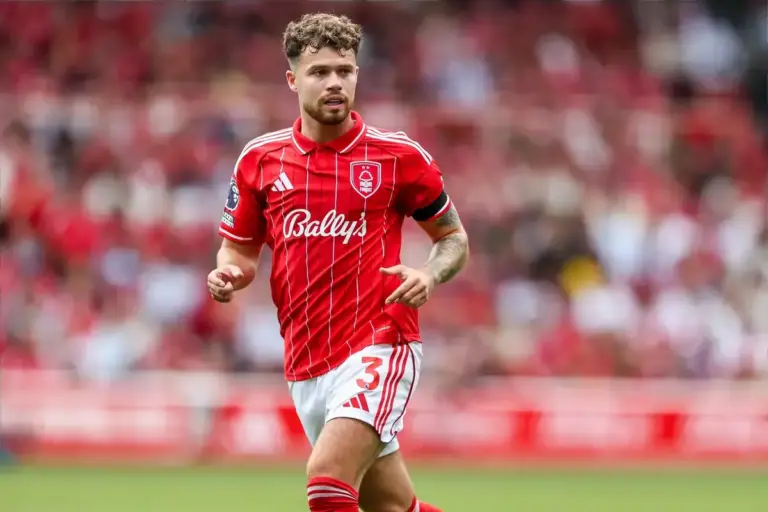
Look at the department as it stands: Ibrahim Sangaré, Nicolás Domínguez, Morgan Gibbs-White, Schlager, captain Ryan Yates and James McAtee. Six senior bodies for a system that asks two central midfielders to cover an enormous amount of ground and two attacking midfielders to invent nearly everything.
It is thinner than it looks on paper, too. Gibbs-White has been managing a knee problem since late August. Sangaré was not risked against Tottenham Hotspur last Saturday after a knock kept him out of the trip to Anfield. Glasner said publicly in late August that he wanted at least one more signing, and the one he wanted most was in the middle of the pitch.
Two bids for Newcastle’s Jacob Murphy were rejected. An advanced £40m move for Everton’s Harrison Armstrong collapsed and he stayed at Goodison Park. A £10m offer for Corinthians midfielder Andre was turned down, and those talks have now resumed with a January move in mind at a £15m asking price plus £6m in add-ons. The midfield remains the loudest item on the January list.
Elliot Anderson Nottingham Forest exit: the model that made the sale
Here is the uncomfortable part, and the part that matters more than a Giggs anecdote. Forest’s recruitment model now demonstrably works: buy young players with ceilings, develop them, and accept an enormous cheque when a state-backed club comes calling. Anderson at a net £15m rising to £116m is the purest expression of it in the club’s history.
The problem with a model that works is that it keeps working. Gibbs-White, Murillo and Dan Ndoye all have precisely the profile that attracts the same class of buyer. A club that sells its best midfielder for £116m and reinvests in a striker, two defenders and a free-transfer replacement in the middle has balanced the books beautifully and made the first team, in one specific area, weaker.
That is a defensible strategy over three seasons. It is a harder sell over three games. Forest have two points from their opening three Premier League matches, a home defeat by Leeds United, then draws at Liverpool and at home to Spurs, and still no win in 2026/27.
What happens next
The Reds are back at it after the September international break, away at Aston Villa at Villa Park at 3pm on Saturday, chasing a first victory of the campaign. Villa were in midweek Champions League action at Club Brugge and have their own fitness questions to answer, which is a small mercy for a Forest side that has had a clear week to prepare and could use one.
As for Anderson, he is a Manchester City player now, and the golf-course pitch that failed is a footnote rather than a what-if. Ferdinand’s assessment of the fee – “astronomical money” – is the real story of Forest’s summer, and Giggs’s persistence on the fairway is just proof that everyone else could see it coming too.
Official confirmations and squad news come via the official Nottingham Forest website and Manchester City’s official site, with fixtures and registration rules published by the Premier League.