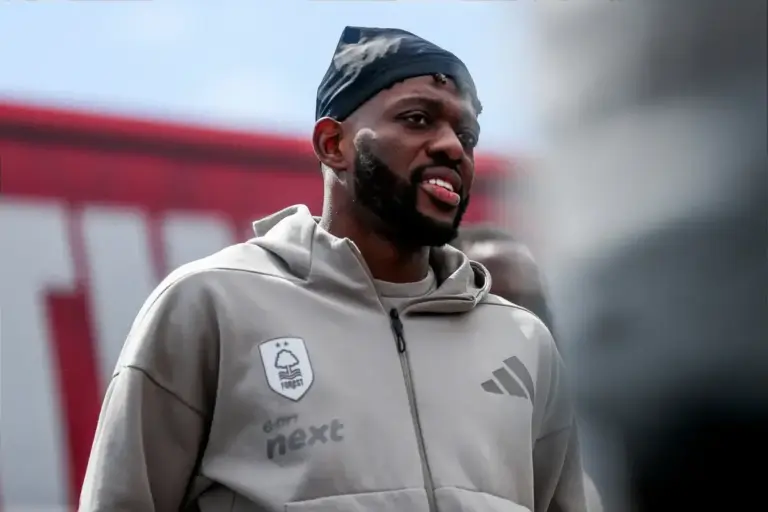
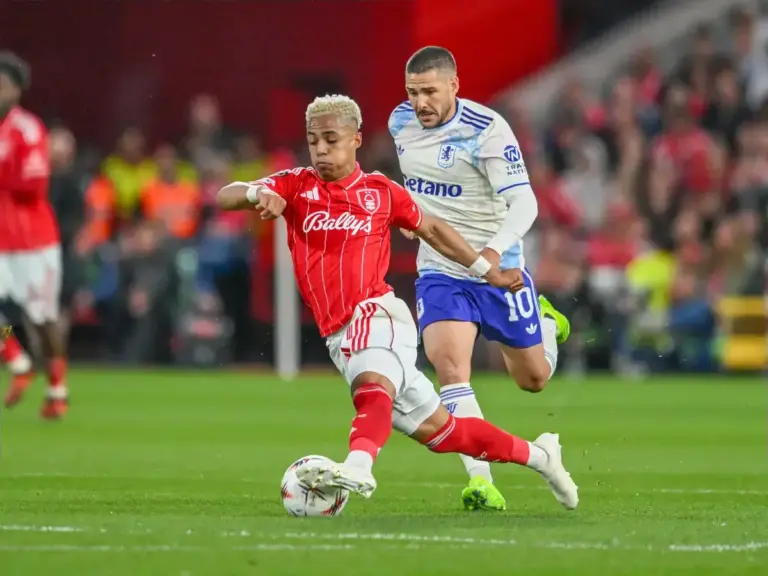
The Harrison Armstrong Nottingham Forest pursuit was, for a few days in the closing week of the window, the most interesting thing the Reds had going. It was also the one deal this summer that Forest did not get done. The window shut at 11pm on Monday with the 19-year-old still an Everton player, and with the City Ground’s recruitment team left to reflect on a chase that got a long way down the road before it hit a wall built almost entirely out of Evertonian anger.
The Nottingham Post set out the sequence on Wednesday morning, and it makes for slightly painful reading if you had already sketched Armstrong into Oliver Glasner’s midfield for the next decade. Forest, the paper reported, put forward a bid in the region of £40million. The move was said to have reached an advanced stage. Armstrong had reportedly even been granted permission to undergo a medical and to discuss personal terms. And then it stopped.
The Harrison Armstrong Nottingham Forest bid: what was actually reported
Some context on the player first, because the fee only makes sense once you have it. Armstrong is 19, an England Under-19 international, and already has 18 Premier League appearances to his name. He came through Everton’s academy, he has been trusted in the top flight at an age when most of his peers are on loan in League One, and inside the game he is regarded as one of the better English midfield prospects of his year group.
That profile is precisely the profile Forest have been buying. It is, more or less, the Elliot Anderson template: young, English, technically secure, bought before the rest of the division has finished agreeing on how good he is. Anderson arrived at the City Ground as a 21-year-old with promise and left in July for a reported £116million, a fee that reset the club’s record sales list and effectively funded this entire window. Forest are not shy about the model. They have simply run out of easy places to apply it.
A reported £40m for a teenager with 18 senior league games is a serious commitment, and it tells you how highly the Reds rated him. It also tells you something about the market Forest are now shopping in. With Anderson’s money banked, the club were never going to find a like-for-like replacement at a sensible price; the choice was between paying a premium for a finished article or paying a premium for a projection. Armstrong was the projection.
Why the Everton backlash mattered more than the money
What killed the deal was not the fee. It was the noise. Once the Reds’ interest became public, Everton supporters made their feelings about losing an academy graduate abundantly clear. The Nottingham Post noted Armstrong’s name being chanted throughout last Saturday’s 1-1 draw at Bournemouth, a game he started, with the travelling support leaving nobody in any doubt about where they stood.
Forest fans, of all people, will recognise the emotion rather than resent it. The Nigel Doughty Academy has produced its share of players the City Ground would have marched on the ground to keep, and the club’s own week has been shaped by exactly that instinct: Omari Hutchinson’s loan exit to AC Milan barely raised a pulse, while Zach Abbott signing fresh terms to 2030 before heading to Southampton was received as the good-news story of deadline day precisely because he is one of Forest’s own.
There is no suggestion Everton were ever obliged to sell, and no suggestion Forest did anything improper. Clubs are entitled to bid for players under contract and players are entitled to listen. But a selling club that was already lukewarm and is then handed a full-throated supporter revolt has very little incentive to push a deal over the line, and that is broadly what happened. Armstrong stayed. Forest moved on.
The Elliot Anderson-shaped hole Armstrong was meant to fill
Which brings us to the part that will nag at people between now and January. Glasner’s midfield is functional rather than deep. Ibrahim Sangaré, Nicolás Domínguez, summer arrival Xaver Schlager, captain Ryan Yates and James McAtee are the senior options in the engine room, with Morgan Gibbs-White operating ahead of them as the creative hub in the head coach’s 3-4-2-1. That is a workable group. It is not an abundant one, and it is a group that lost its single most valuable component in July.
Forest looked at alternatives all summer. Names came and went — Nicolò Fagioli, Marc Casado, Youssouf Fofana — without a deal materialising, and the club’s search for a midfield answer ran right up to the deadline. In the final 48 hours the focus shifted to the flanks instead: an initial £10m bid for Newcastle United’s Jacob Murphy was rebuffed, and according to the Daily Mail, a second offer worth £15m was also rejected before the window closed.
Glasner had said after the 2-2 draw at Anfield that Forest could add up to three new faces before the deadline. In the end they added one, Daniel Muñoz, and the head coach starts September with the squad he has until the New Year.
What Forest did get done: £101m and five new faces
It is worth being fair to the window as a whole, because the Armstrong story is a footnote to a summer that was, by Forest’s recent standards, unusually calm. The Nottingham Post’s full ins and outs put the outlay at £101million across five signings: Schlager on a free from RB Leipzig, Ousmane Diomande from Sporting for a reported £34m, back-up goalkeeper Steven Benda on a free, Liam Delap in a club-record deal reported at around £50m, and then Daniel Muñoz following Glasner from Crystal Palace.
The outgoings were about trimming rather than raising money. Morato went to West Ham United on a season-long loan with an option to buy, Abbott to Southampton, Hutchinson to Milan with a reported €40m option, Dilane Bakwa to Lille. Glasner prefers a small group, has no European football to plan around and is already out of the Carabao Cup, so a squeezed squad is a deliberate choice rather than an accident.
Deadline day itself passed without a single arrival — no trolley dash, no panic button, none of the late chaos that has become a City Ground tradition. Whether that reads as maturity or as a missed opportunity is exactly the argument dividing the fanbase this week.
Where this leaves Glasner before Tottenham
The honest verdict on the Harrison Armstrong Nottingham Forest episode is that Forest identified the right kind of player, moved decisively, and lost out to circumstances they could not control. That is not a scandal. It is what happens when you try to buy a 19-year-old that a rival’s supporters have already decided is theirs.
The consequence is that the midfield question Anderson’s exit created has been deferred rather than answered, and it will be asked again in January — possibly with a higher price attached, because Armstrong will have had another half-season of Premier League football by then and Everton will know exactly what that is worth.
For now, the focus narrows to Saturday’s 3pm kick-off against Tottenham Hotspur at the City Ground. Forest are still chasing a first win of the campaign after defeat to Leeds United in both league and cup and the encouraging 2-2 draw at Liverpool, and Glasner has been clear that the Anfield performance needs to become the standard rather than the exception. Three points on Trentside would do far more for the mood than any deal that did not happen.