Nottingham Forest have spent more than £100 million on players in a single summer, broken their transfer record for a centre-forward and banked a nine-figure fee for a midfielder. In the middle of all that noise, the Nottingham Forest academy keeps quietly doing the job it has done for decades: producing footballers from the East Midlands who end up captaining the Reds, captaining other clubs, or paying for half a rebuild when they leave.
Where the Nottingham Forest academy is and who it is named after
The academy operates out of the club’s training base on Wilford Lane in West Bridgford, a short drive from the City Ground on the other side of the Trent. It is formally the Nigel Doughty Academy, named after the former Forest owner and chairman who funded its development and who died in February 2012.
Doughty’s money built the facility; the name is the club’s way of keeping that on the record. Forest hold Category One status, the top tier of the Premier League’s Elite Player Performance Plan, which governs coaching hours, facilities and the age at which academies can recruit. Category One is the level that lets a club run a full development programme from the youngest age groups through to under‑21 football, and it is the level Forest have fought to hold through relegations, takeovers and a 23‑year exile from the top flight.
The graduates: from Michael Dawson to Ryan Yates
The roll call is better than most supporters of rival clubs assume.
Michael Dawson came through at Forest, made his debut as a teenager and was sold to Tottenham Hotspur in January 2005. He came back a decade later and finished his career captaining the club he started at. Jermaine Jenas, a Nottingham lad, went from the Forest academy to Newcastle United in 2002 and on to England caps. Wes Morgan, also born in Nottingham, spent years in the Forest back four before joining Leicester City and lifting the most improbable Premier League title in the competition’s history in 2016.
Jamaal Lascelles left for Newcastle in 2014 and became their captain. Oliver Burke was sold to RB Leipzig in 2016 for a fee reported at around £13 million after barely a season of first-team football. Matty Cash arrived as a teenager from Wycombe Wanderers and did the rest of his growing up at Wilford Lane, converting from a winger into a right-back before joining Aston Villa in 2020 — which is why his name still comes up every time the fixture list pairs the two clubs.
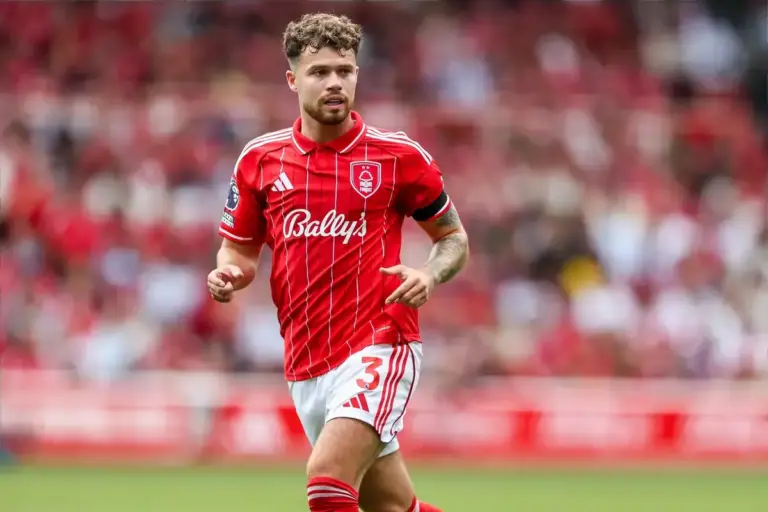
And then there is Ryan Yates. Born in Nottingham, through the academy, out on loan into the lower leagues to learn the trade, back into a Championship midfield, and now the Forest captain in the Premier League. In an era when a club can solve a problem by writing a cheque, Yates is the argument for the other route, made in public every weekend.
Brennan Johnson and what an academy is actually worth
The clearest financial case for the academy is Brennan Johnson. Nottingham-born, son of a former Forest striker, promoted through the age groups, sharpened by a season on loan at Lincoln City, then central to the promotion team — and eventually sold to Tottenham in 2023 for a fee reported at around £47.5 million. He sits high in our list of the biggest fees Forest have ever received.
That is the part supporters sometimes miss when a homegrown player is sold. Under profit and sustainability rules, a fee for an academy graduate counts as almost pure profit, because there is no transfer fee left on the books to write down. One Johnson gives a club more room to manoeuvre than three good pieces of trading in the market, and it is a large part of how Forest have been able to spend the way they have.
The current crop
The pipeline has not dried up. Zach Abbott, a centre-back who came through the Forest system, signed a new contract running to 2030 before joining Southampton on a season-long loan — the club securing the player first, then sending him out for the minutes a Premier League squad cannot easily give him. Josh Powell went to Northampton Town on the same principle.
That is the modern academy model in one line: develop, tie down, loan out, reassess. The loan year at a hard-nosed EFL club is not a demotion, it is the curriculum. Yates did it. Johnson did it. Dawson, in his day, did not have to, but the game has changed.
Where the academy fits under Oliver Glasner
Head coach Oliver Glasner arrived in July 2026 with a reputation built on structure rather than sentiment, and his 3‑4‑2‑1 is a demanding system for a young player to walk into. Wing-backs have to cover the whole flank; the two players behind the striker are asked to press on specific triggers and then create. It is not a shape that hides anybody.
But a coach who trusts a system also tends to trust players who have been taught it for years rather than months, which is precisely what an academy produces. Yates wearing the armband is not a token gesture from a club that spent nine figures in one window. It is a signal about what Forest still think the place on Wilford Lane is for.
How to join the Nottingham Forest academy
Forest, like every Category One club, run their own scouting network and development centres across the region, and recruitment is done through those channels rather than open trials advertised online. Anything promising a paid route into a Premier League academy should be treated with heavy suspicion. The official Nottingham Forest website is the only place worth checking for genuine academy and development-centre information.
For everyone else, the academy is best measured the way it always has been: by how many players in a red shirt on a Saturday learned the game a mile down the road. Right now that number includes the captain — which, for a club with this much money moving through it, is not a small thing.
Academy structure and Elite Player Performance Plan categories are set out by the Premier League; club and academy information is published on the official Nottingham Forest website.